


Avoidance after an accident delays recovery and drives up costs
After a motor vehicle accident, many people develop anxiety around driving, being a passenger, or even entering a vehicle.
This avoidance slows recovery, increases treatment duration, and leads to higher claim costs, delayed return to work, and poorer long-term outcomes.
Traditional exposure therapy is effective, but difficult to deliver consistently in real-world driving environments.

A scalable, structured pathway to rebuild driving confidence
oVRcome enables graded exposure therapy through smartphone-based virtual reality, allowing users to safely confront driving-related fears before transitioning into real-world environments.
This creates a seamless recovery pathway that can be delivered at scale, both inside and outside the clinic.

Step 1
Identify the barriers
Personalised onboarding identifies driving triggers, avoidance behaviours, and readiness for change.

Step 2
Gradual exposure in VR
Users complete structured VR sessions simulating real driving scenarios, reducing anxiety in a controlled environment.

Step 3
Transition to real-world driving
Confidence built in VR translates into real-world exposure, supported by clinicians or rehabilitation providers.

Step 4
Track recovery and outcomes
Progress is measured through validated scales, exposure completion, and functional milestones like return to driving and work.
Proven outcomes in real-world insurance programmes


In partnership with Allianz, oVRcome delivered measurable improvements across recovery, cost, and mental health outcomes:
60.7%
shorter treatment duration
32.1%
faster return to work & daily activities
34.1%
reduction in average claim cost
31%
improvement in PTSD symptoms
43%
improvement in anxiety symptoms
55%
improvement in psychological flexibility
These outcomes demonstrate the impact of combining exposure therapy with scalable digital delivery.
Why It Works
Built on evidence-based treatment, delivered in a way that actually gets used
Exposure therapy is one of the most effective treatments for anxiety, but is underutilised because it’s difficult to deliver
VR removes logistical barriers, making exposure safe, repeatable, and accessible

Smartphone delivery enables scale without expensive hardware
Structured pathways ensure consistency across users and providers
Designed for organisations responsible for recovery outcomes

Insurers aiming to reduce claim duration and cost

Rehabilitation providers supporting post-accident recovery

Clinicians treating driving anxiety and trauma-related avoidance

Partners building end-to-end recovery pathways
Trusted by over 1,000 clinicians across 64 countries to integrate virtual reality into their everyday practice.


Delivered remotely or alongside in-person rehabilitation


Smartphone-based VR with low-cost headsets
Simple to deploy, easy to scale
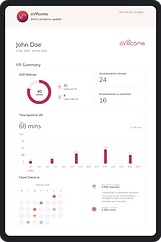

Data capture to support outcomes reporting and optimisation
Clinician portal for tracking and support


